
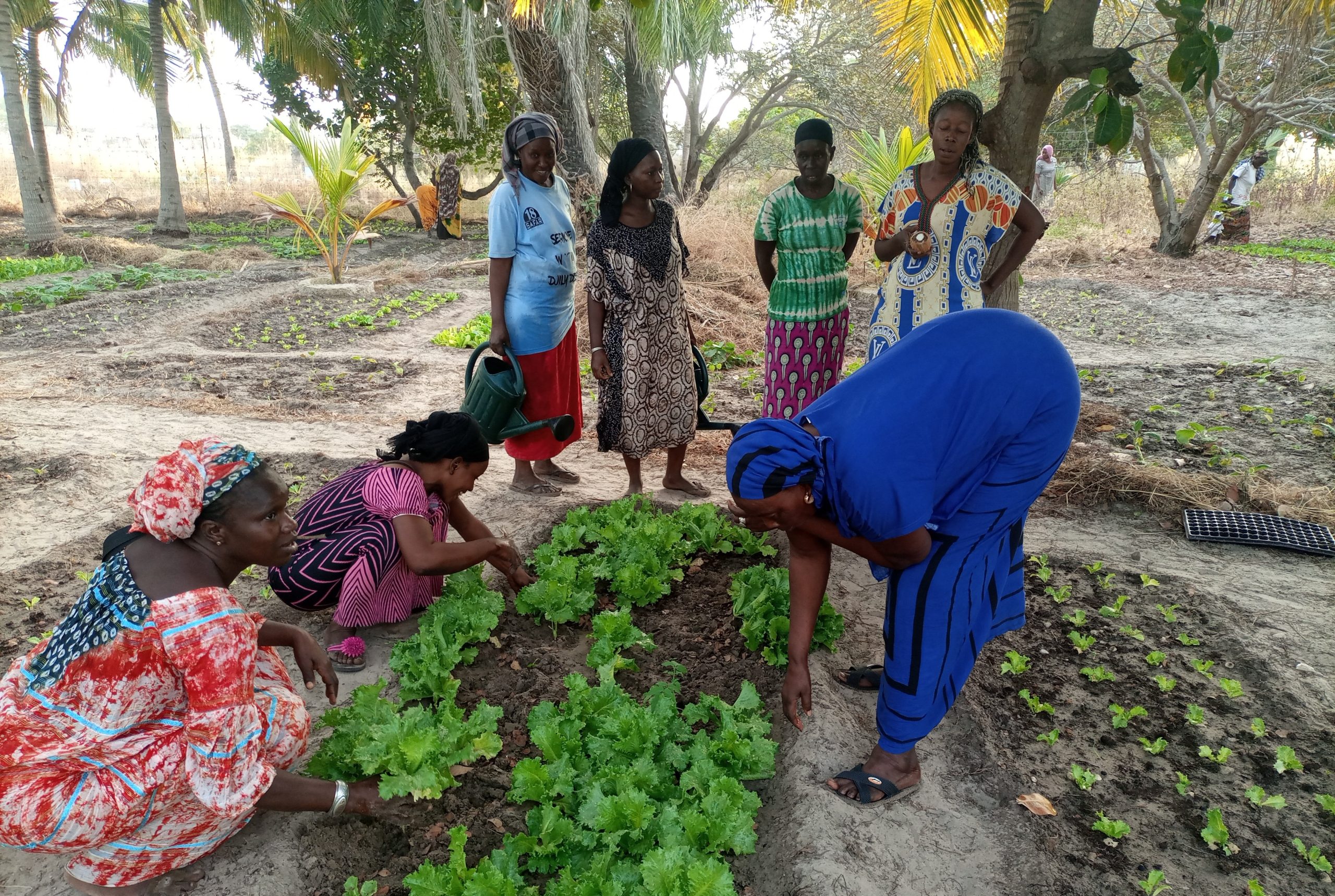
Three initiatives focused on building research capacity and strengthening evidence ecosystems, primarily across Africa. The other three worked to generate policy-relevant evidence on food systems, clean energy transitions, and health care access, across Sub-Saharan Africa and South-East Asia.
PEP’s Building Sustainable and Synergistic Ecosystems for Evidence-Informed Policymaking (EIPM) initiative focuses on strengthening national systems that support the use of evidence in public policy. Supported by the William and Flora Hewlett Foundation, the programme works across selected African countries to improve how research and government institutions work together to produce, share, and use evidence within policymaking processes.
Rather than focusing primarily on the supply of evidence, the program takes a systems-level approach that seeks tostrengthen the relationships, incentives, and institutional structures shaping how evidence informs decision-making. This includes supporting the development of collaborative partnerships between government institutions and research organizations, as well as the adoption of practices and mechanisms that facilitate the flow and use of research-based evidence within policy ecosystems.
In 2025, activities focused primarily on preparing and supporting research organizations to engage effectively with their target government partners. This included participation in PEP’s new training program on “Thinking and Working Politically”, designed to strengthen capacities in policy and political context analysis, stakeholder engagement, and research co-production. Through these activities, participating organizations began developing more structured and strategic approaches to collaboration with policymakers. The programme also generated practical insights into how evidence-informed policymaking can be operationalized in real-world contexts, drawing on lessons emerging from ongoing country experiences. By the end of the year, all participating organizations were in the process of formalizing their collaborations through Memoranda of Understanding with their selected government partner institutions.
The EIPM initiative reflects PEP’s broader commitment to ensuring that research is not only produced, but also embedded within institutional processes and decision-making systems, enabling more consistent and sustainable use of evidence in public policy. Lessons emerging from the initiative will help identify barriers to evidence use, strengthen institutional linkages, and promote more effective integration of research into policy design and implementation.
🔗 Learn more about the EIPM initiative and country-level engagements
The Learning and Knowledge Management Project (LKMP) supports the generation, synthesis, and dissemination of policy-relevant evidence across PEP’s programmes and partnerships. Funded by Global Affairs Canada, the project plays a cross-cutting role in strengthening how knowledge is produced, shared, and used to inform policymaking.
LKMP focuses on enhancing both research quality and knowledge uptake, through activities that include impact evaluations, synthesis of research findings, and the development of knowledge products tailored to policy audiences. It also supports capacity strengthening efforts by equipping researchers and institutions with tools and approaches to communicate evidence more effectively.
In 2025, LKMP continued to support a range of research and knowledge management activities across PEP’s portfolio. This included ongoing work to consolidate lessons from completed projects, strengthen dissemination pathways, and enhance the accessibility of research outputs for policymakers and other stakeholders.
As part of this broader programme, a specific impact evaluation study in Bolivia was completed in 2025, contributing to PEP’s growing body of evidence on policy-relevant interventions.
Through its integrated approach, LKMP contributes to ensuring that research is not only produced, but also translated into actionable insights and effectively communicated, supporting evidence-informed policymaking across countries and programmes.
🔗 Explore LKMP publications and news
The Africa Fellows in Education Program (AFEP) supports the development of a new generation of African researchers working at the intersection of education systems and labour market outcomes. Implemented in partnership with the Global Education Analytics Institute (GEAI), the programme combines advanced training, mentorship, and research support to strengthen locally led evidence on education policy across the continent.
AFEP focuses on building analytical capacity and policy-relevant research skills, enabling fellows to design and conduct rigorous studies that address key challenges in education systems. Areas of focus include learning outcomes, education quality, access and equity, and the alignment between education and labour market needs.
In 2025, AFEP continued to support fellows through structured training, collaborative learning, and ongoing research activities. Fellows also engaged in peer learning and knowledge exchange processes, strengthening regional research networks and contributing to a growing community of practice in education policy analysis.
The programme contributes to a deeper understanding of how education systems can better support skills development, school-to-work transitions, and inclusive economic participation, particularly in the context of rapidly changing labour markets.
Through its integrated model of training, mentorship, and research, AFEP strengthens both individual researcher capacity and institutional ecosystems.
🔗 Learn more about AFEP and participating fellows
The initiative focuses on strengthening home-grown school feeding systems in Ethiopia by examining how procurement and cooking models can be designed to be more inclusive, efficient, and sustainable.
The research team is exploring how school feeding programmes can better link local agricultural production with public food procurement systems, while also improving the delivery of meals to students. Particular attention is given to identifying approaches that support local producers, enhance supply chain efficiency, and promote sustainable cooking practices.
In 2025, ongoing research and engagement activities continued to examine the policy and implementation challenges associated with scaling home-grown school feeding models. This includes understanding how procurement systems can be structured to better integrate smallholder farmers, as well as how operational models can improve both cost-effectiveness and nutritional outcomes.
Through this work, CRISP contributes to broader policy discussions on food systems, education, and local economic development, highlighting the role that integrated policy design can play in supporting both agricultural livelihoods and social protection programmes.
🔗 Learn more about this initiative
The Rural renewable energy MSMEs operating to modernize agriculture in Sub Saharan Africa and South-East Asiainitiative explores how renewable energy solutions can support inclusive agricultural development in Burkina Faso, Kenya, Uganda and Vietnam. The programme brings together research and policy engagement to examine opportunities and constraints in clean energy transitions.
Focusing on how renewable energy can support agricultural value chains and micro, small, and medium-sized enterprises (MSMEs), the research activities examine the barriers that limit adoption of clean energy technologies, as well as the policy and market conditions required to enable sustainable and scalable solutions.
In 2025, ongoing research and engagement activities continued to explore the intersections between energy access, productivity, and entrepreneurship, with a particular focus on rural and underserved contexts. The work highlights the importance of aligning clean energy interventions with local economic systems, ensuring that energy access translates into tangible development outcomes such as income generation, business growth, and employment opportunities.
Through its involvement in the broader CEDCA initiative, PEP contributes to broader discussions on how to design inclusive and context-responsive energy policies, reinforcing the need for evidence that reflects the realities of developing economies.
🔗 Learn more about the country projects on the programme page
PEP is supporting a team of local researchers to assess the effectiveness of a new contribution system, tailored to the economic capacity of households, to increase access to equitable access to health care services in Ethiopia.
The research team based at Jimma University is working in collaboration with the Ethiopian Health Insurance Service (EHIS), the government institution in charge of implementing this new policy initiative. Working with PEP experts specializing in experimental impact analysis, the team undertook mid-line data collection and analysis, and began the second round of the programme implementation.
🔗 Learn more about the research design and expected results on the programme page


